Batch No. 3
US Navy Shawl Collar Shirt
US Navy Shawl Collar Shirt
Couldn't load pickup availability
A shawl collar denim shirt as worn by the US Navy. Constructed from 13.75 oz American selvedge denim. Pre-washed for an immediate broken-in handle. The selvedge runs vertically behind the placket on both sides. Anchor-etched buttons. Fits true to size. Handmade in the UK.
Cut & Fit
Cut & Fit
Batch No. 3 fits true to size.
Please see our Size Guide for detailed measurements.
It's always best to compare the measurements from our size chart to those from a garment that you already own and that fits you well.
Fabric & Care
Fabric & Care
- 13.75oz American selvedge denim
- Indigo dyed 100% organic cotton
- Pre-washed to remove shrinkage
- Wash only when needed
- Wash inside out with similar colours
- Indigo denim will develop a unique patina over time and with wear


Logistics & Dispatch
Logistics & Dispatch
For this Batch, we start by purchasing the fabric, then we make as many garments as the fabric meterage allows. We'll email you to confirm when your order enters production and again when it ships.
We make each jacket to order rather than holding stock - it's how we avoid waste and maintain our quality standards.
If your jacket doesn't fit as expected or isn't quite what you hoped for, we accept returns within 28 days of delivery. Our returns policy has the full details.


History of the Shawl Collar Shirt

The U.S. Navy Denim Utility Jacket — or "dungaree jacket" as sailors called it — has been a constant since 1901, when the Navy first approved denim as a working uniform. Before that, sailors were expected to haul coal, paint hulls, and carry out repairs in their formal wool uniforms.

The Navy needed something that was durable, lightweight, and washable. The solution was indigo-dyed denim, around 10oz in weight — cheap, tough, and dark enough to hide the grease and oil that came with the job.
By 1918, the design had evolved into a full button-front jacket, and it remained standard Navy issue through into the early 1950s. The shawl collar wasn't just a style detail, it was practical, allowing the wearer to flip it up to protect the neck from sun and wind while on deck.

Among sailors, it was highly favoured for its comfort and practicality compared to the stiff and formal "Crackerjack" wool uniforms.
After the war, returning veterans kept wearing them. The jacket found its way into dockyards, workshops, and eventually onto the high streets — becoming one of the cornerstones of American workwear.
Why We're Making It
Both Jim E and Pete have a thing for denim. Whether it's vintage Japanese selvedge, classic Americana or UK ateliers like Hiut Denim or Black Horse Lane, the desire to create something in denim has always been there. So when, late one night, they came across the shawl collar shirt, Batch No. 3 was born.
From there it was about finding the right denim. We wanted something that was as essential to the product as the shawl collar itself. That search led us to Cone Denim, specifically their White Oak selvedge. The history behind Cone is worth knowing in itself: for over a century they supplied some of the most iconic denim brands in the world. We couldn't think of a more fitting fabric for this batch.


How We Make It
Every Avre batch begins with an original garment. For this one, we tracked down an original in remarkably good condition.
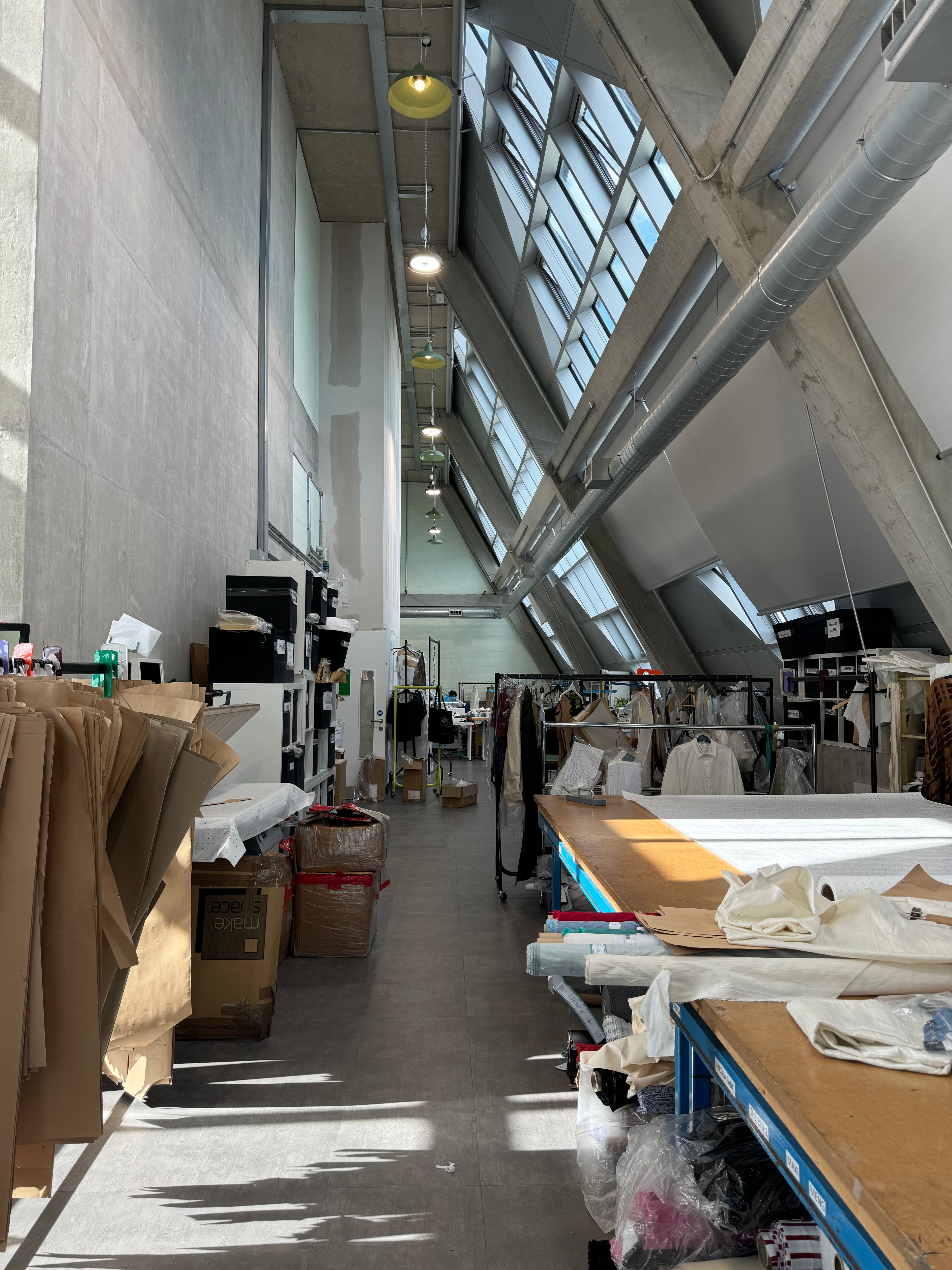
From there we take it to our studio in Greenwich, where we inspect every stitch, seam, trim and panel. We draft a pattern, cut a toile, and fit it — usually on Pete.
We go back and forth a bit until the fit is right and the construction details stay as true to the original as possible.
Once we've signed off the toile and we've sourced all the necessary sampling fabric and trims, we make up the first sample. Assuming we love it (we usually do), we get it shot and from there onto the website.

How To Wear It
This is a relaxed, easy piece. The Cone selvedge softens beautifully and the cut is generous enough to throw over a light knit. It works just as well with jeans and boots in the city as it does thrown over a tee with shorts on a warm evening at the beach.
It fits true to size.


Handmade in London
All our garments are handmade in Greenwich, London. This allows us to remain very close to all stages of the production process.